


Anything

Open Board
· 6 followers
RC YuKris Willow
Mercedes C.•12 days ago
ice cream

Adding protein to ice cream makes it melt slower?? 🍦🍧🍨🧁

Was recently rewatching Culinary Class Wars (S1 E4), and one of the contestants was eliminated - his ice cream dish was critiqued to be a little 'off'.

He explained that he tweaked the recipe to incorporate a higher protein content (more eggs) in fear that the ice cream would melt too fast during the judging process. The judges also seemed quite clear on what went down as well - so that got me thinking is this common knowledge among chefs? ∘ ∘ ∘ ( °ヮ° ) ?

🧪 A quick search on Google led me to quite the scientific exploration of the process and chemistry of ice cream melting.

The Science of Ice Cream Meltdown and Structural Collapse: A Comprehensive Review

Proteins in ice cream not only contribute to its nutritional value but also play a key role in stabilizing the air–water (A/W) and oil‐water (O/W) interfaces, thereby influencing fat destabilization. The thickness of protein coverage on the O/W interface, the ability of the proteins to reduce interfacial tension, and the extent of surface coverage all play crucial roles in determining the degree of partial coalescence under the influence of shear forces during freezing. In the realm of dairy ice cream, whey protein and casein are the primary proteins influencing fat stabilization.

Notably, ice cream containing 10% protein forms an exceptionally stable emulsion, with no observed fat destabilization. 💪

Though I couldn't really find anything pertaining to egg proteins in particular --

Comprehensive Reviews in Food Science and Food Safety
Comprehensive Reviews in Food Science and Food Safety · 2025

The Science of Ice Cream Meltdown and Structural Collapse: A Comprehensive Review

Wu, Atik et al.
1 10
Mercedes C.•a month ago
typhoon

Typhoons in Taiwan 🌪️

After the intense Typhoon Champi, everything finally seems to be returning to normal as of Sunday. Phew - This one was really no joking matter. 💨

Hope everyone is doing fine. Though I have heard some quote unquote "trends", on typhoons from Taiwanese locals that I made me do a quick search.

。𖦹°‧ Some have pretty good scientific backing behind them that I thought it would be interesting to share :

  1. Typhoons that come after the summer months (June/July/Aug/Sept) tend to be bigger and more dangerous.

Interestingly, there is quite a bit of evidence behind this. A 2025 paper outlines the mechanism and mentions that in autumn, typhoons travel more equatorward and encounter more favourable ocean sub-surface conditions for intensification. Compared to summer, the thermodynamic disequilibrium between the ocean surface and the lower atmosphere is more prominent.

  1. In recent years, the Typhoons have been coming later in the year than before.

There seems to be a dispute over this as:

A 2023 paper identifies a significant seasonal advance of intense typhoons since the 1980s in most tropical oceans, with earlier-shifting rates of 3.7 and 3.2 days per decade for the Northern and Southern Hemispheres, respectively.

Another 2025 paper finds a significant delay of the typhoon season in China, shifting later at a rate of 5 to 8 days per decade over the satellite era 1979−2023. 

∘ ∘ ∘ ( °ヮ° ) ?

👀 We know that El Niño plays a big role in typhoons. And given the Super El Niño this year with all the Indonesian forest fires, I guess its not a surprise that this year’s typhoons are also stronger it's a grim outlook. I guess my only other questions is: how much did global warming play a role in this? or are they more independent climate change? 🌧️

3 6

Join the social media for nerds.

Where sources matter.

By continuing with Apple or Google, you agree to the Terms of Service and Community Guidelines and you've read the Privacy Policy, including how Citation Check uses third-party AI services.

Have an account?

Carol Euyang•24 days ago

This surprised me.

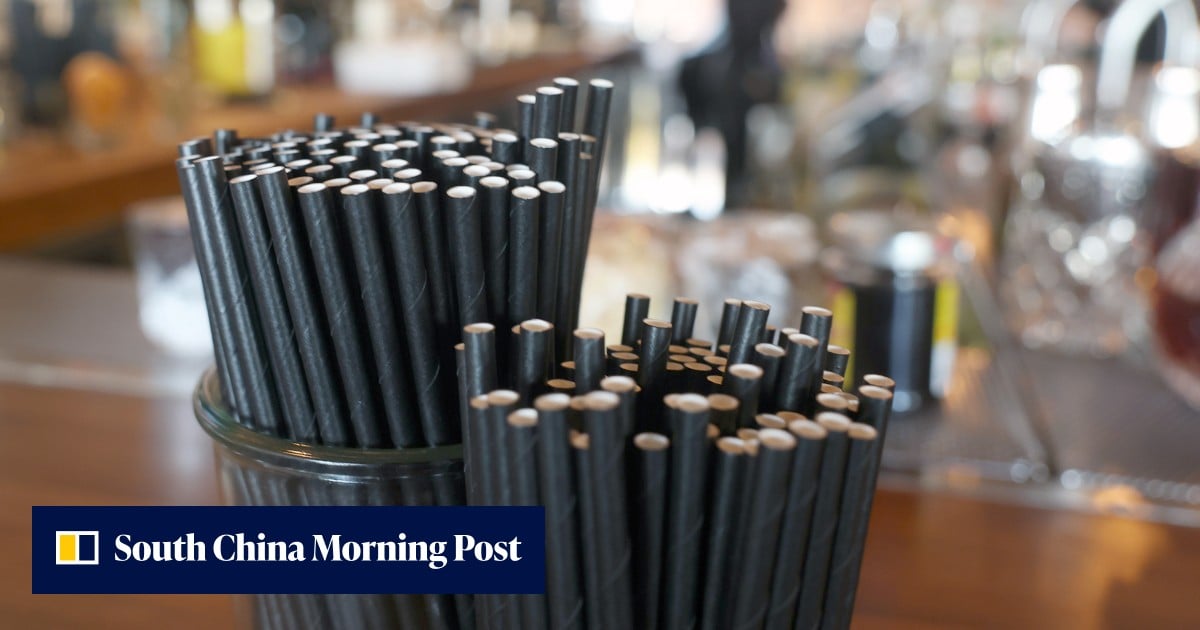
Paper straws worse for the environment than plastic, South Korea study finds | South China Morning Post Paper straws worse for the environment than plastic, South Korea study finds

SSouth China Morning Post · Oct 23, 2026

Paper straws worse for the environment than plastic, South Korea study finds

The report finds paper and bio-based straws generate higher life-cycle emissions, prompting calls to cut single-use consumption at source.

By Person, SCMP’s Asia desk, https://www.scmp.com/author/scmps-asia-desk
1 4
RC Yu•24 days ago
life cycle assessment

Papers vs plastic straw? Environmental impact

Good question.

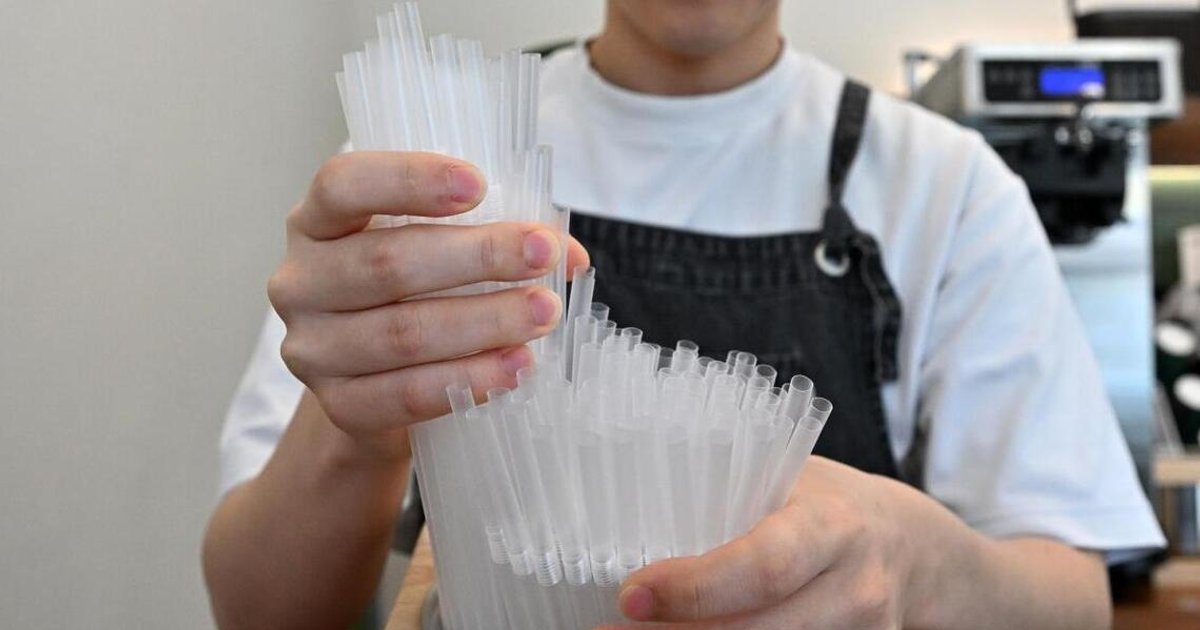
A Korean report going around has a surprising find: plastic straws are better for the environment vs paper straws.

The report is basically a "life-cycle assessment" of the environmental impact of paper vs plastic straws.

(Incidentally, I spent a term at the Nanyang Technology University in Singapore doing life-cycle assessments!)

So is the Korean report right? I did some digging.

Summary:

  • It is true that plastics straws are better on some measures (vs paper straws) e.g. climate change impact.

  • However, alternatives like wheat straws (which was not studied by the Korean report) are better.

  • And paper straws still degrade much quicker than plastics (so they won't get eaten by turtles).

(Read on for the full details and sources!)

I couldn't find the actual report/study, but here's an accessible news coverage, which highlights some key findings from the Korean report:

  • Conventional plastic straws had the smallest [environmental] impact in 10 of the 16 categories, including climate change, acidification, particulate matter and human toxicity.

  • On carcinogenic impact – paper scored 6.33× (worse than) conventional plastic, biodegradable plastic 3.34× worse, and bio-PE 16.18× worse. (This is a measure of waste during the manufacturing process, not cancer risk to anyone using a straw.)

  • Bio-PE was the worst overall and despite being plant-based, it does not biodegrade. ("Bio-PE is made from renewable plant-based sources such as sugarcane, but it is chemically identical to conventional polyethylene and does not biodegrade. It is distinct from biodegradable plastic.")

  • Straws of every material are effectively unrecyclable. They are too small for sorting facilities, and coatings and adhesives get in the way.

To note, the Korean report is a government commissioned study. But we can find academic/peer-reviewed studies to compare – for example this 2025 study from Greece.

The findings (from the Greek study) are consistent with the Korean study (paper and bioplastics are worse), but it also included wheat straws (which fared better than plastics):

  • Wheat straws had the lowest overall environmental impact and a climate-change result of 0.0568 kg CO2 equivalent per year.

  • Plastic cost least, at €0.30 yearly, with a reported climate impact of 0.084 kg CO2 equivalent.

  • Paper and bioplastic reached up to 2.5 times plastic’s climate impact.

  • Washing accounted for about 85% of metal straws’ annual climate impact, around 0.169 kg CO2 equivalent.

One thing the Korean study didn't seem to highlight, is the relative biodegradability of the paper straws.

This 2024 study does, and reports that paper straws lost 25–50% of their mass in 16 weeks, while plastic straws showed no measurable mass loss.

Carol Euyang•24 days ago

This surprised me.

Paper straws worse for the environment than plastic, South Korea study finds | South China Morning Post Paper straws worse for the environment than plastic, South Korea study finds

4 3
RC Yu•17 days ago
physics

Measuring small things (the "zeptoverse")

This physics finding reported on the BBC sounds very cool:

Scientists have picked up signals from the smallest scale of nature ever explored – 100 billion times smaller than an atom.

A world so small that some physicists have nicknamed it the zeptoverse.

Sounds mind boggling.

And apparently this is the actual research paper that reports the findings. It's obviously way above my understanding, but cool to "see" nonetheless!

0 2
RC Yu•a month ago
coral

Healthy corals can help bleached corals?

Coral bleaching is when the corals get stressed and lose their algae. They turn white and start to starve, and can eventually die.

So, I was happy to see this cool paper shared on Facebook.

The credo summary is helpful. The TLDR:

Brief contact with a healthy coral can restore a bleached coral by quickly supplying the tiny partners it needs to survive. The approach worked only when the corals shared the same genetic type.

Sounds like it's still somewhat "early stages" and not implemented at a large scale, but it sounds promising.

Science Advances
Science Advances · 2026

Rapid coral bleaching recovery via symbiont transfer from healthy corals

Collins, Sipkova et al.
1 1
Mercedes C.•2 months ago
jade

Can Jade / Jadeite actually change colour over time?

I've always heard this myth by the older generation swear by :

The longer you wear a jade, the 'greener' it gets. Basically 人养玉,玉养人

Since they are essentially a stone crystal, I'm personally leaning towards it being a hoax...? Would love to know more from anyone knowledgeable about this..

From a quick search of jade-related academic articles:

  1. From this study I found that we now use a combination of FTIR, Raman and XRF spectroscopies to identify jade, which are all testing the chemical composition of jade. -- not colormetric

  2. This paper does discuss the alterations of jade color , in which they describe 'alteration' as : to refer to chemical component and structural changes in jade artifacts caused by human activity and natural weathering. >> in which alterations of different hues of green was caused by malachite alteration > caused when in present of large amounts of copper

1 0
Mercedes C.•4 months ago

USB C works for an external monitor when connected through a hub but not directly??

I’m having a strange issue with my portable monitor:

  1. Connecting the monitor directly to my laptop’s USB-C port → it does not work.

  2. Connecting the same monitor using the same USB-C cable through a USB-C hub (from the exact same laptop USB-C port) → it works perfectly.

  3. The hub is not connected to external power.

  4. This exact monitor worked with a previous laptop with the same C-to-C cable.

When I initially couldn't use this port directly, I chalked it up to having a non-display support USB-C port... But now it workks through a hub?!!?

Does anyone know why this happens? Is the hub changing the USB-C negotiation, enabling DisplayPort Alt Mode differently, or is there some compatibility issue between the laptop and monitor?

Would appreciate any insights from people familiar with USB-C/DisplayPort Alt Mode! 🙏

1 0
RC Yu•6 months ago

Are lobsters basically sea cockroaches?

Is cockroach meat similar to lobster meat?

Relatedly, some populations refused to eat fish / seafood, although abundant.

Do we see cockroaches like these people basically saw fish (i.e. "ew!")?

8 0
Mercedes C.•5 months ago
life hack

Any Advice for the best renter friendly 'tape' that can hold a fair amount of weight?

Hey guys. Wanted to seek some advice on what tape would be good to hang up some string lights -- Nano tape and Blu-tack have previously worked for me on other things, but this round seems to keep dropping every 1-2 weeks.

1 0